

How An Embroidery Factory Works?
Embroidery is the art of decorating fabrics using yarn or a needle and a thread. It entails using unique materials such as sequins, quills, beads and pearls. Embroidery is incorporated on hats, blankets, overlays, coats, dresses, golf shirts, dresses, and stockings. It is available in various colors and can be used on virtually everything, including blankets, overlays, denim, and hats.
Factory embroidery creates patterns on garments using machines. These are special machines that put stitches on garments. It is a process that starts by creating designs and putting them on software. A computerized machine is then used to create and fix patterns on textiles.
The commonly used stitches in hand embroidery include cross stitches, satin stitches, running stitches, and blanket stitches. Industrial embroidery uses machines to create patterns on textiles. Such textiles can be used in advertising, branding and uniform adornment. Factory embroidery combines human labor and machines to stitch designs onto apparel, including uniforms, visors, caps, and many more. Read on to see how an embroidery factory works.
Brief History
The art of embroidery traces its roots to between the 3rd and the 5th century BC. But running stitches, whip stitching, buttonhole stitch, stem stitch, and back stitches were commonly used between 300 and 700 AD. The stitches were used for decorative purposes. In 1848, the first commercial embroidery manufacturing company was established in New York. This was after Joshua Hellmann developed the first embroidery machine in the 1800s. However, the invention of chain embroidery and shuttle embroidery methods revolutionized factory embroiders.
The Emergency Of Embroidery Factories
Initially, the embroidery was done manually using a thread and a special crotchet needle to make patterns on garments. But as the demand for embroidery increased, especially in the advertising and marketing industry, there was a need to increase production to meet the demand. It led to the emergency of embroidery factories where patterns could be attached to garments in a manufacturing setting. Later, digitized machines were invented and were used to design and integrate aesthetics into garments rather than attaching them on pieces of clothes.
Putting Logos and Slogans on Surfaces
As the advertisement niche expands, it is becoming necessary to put its logo and slogans onto surfaces and materials. But some logos are so complex that it requires advanced technology and tools to get them on a surface. This need led to the invention of digitization. It is a process, in which company logos are converted into readable data and fed into computers. Firstly, scanners convert the logos into digital data, which is then feed them into the computer.
Advanced technology such as vector graphics is then used to adjust the size of the logo or advert. A computerized embroidery program is developed to allow for issuing and executing commands. Some software may also be used to enhance the quality of the final product.
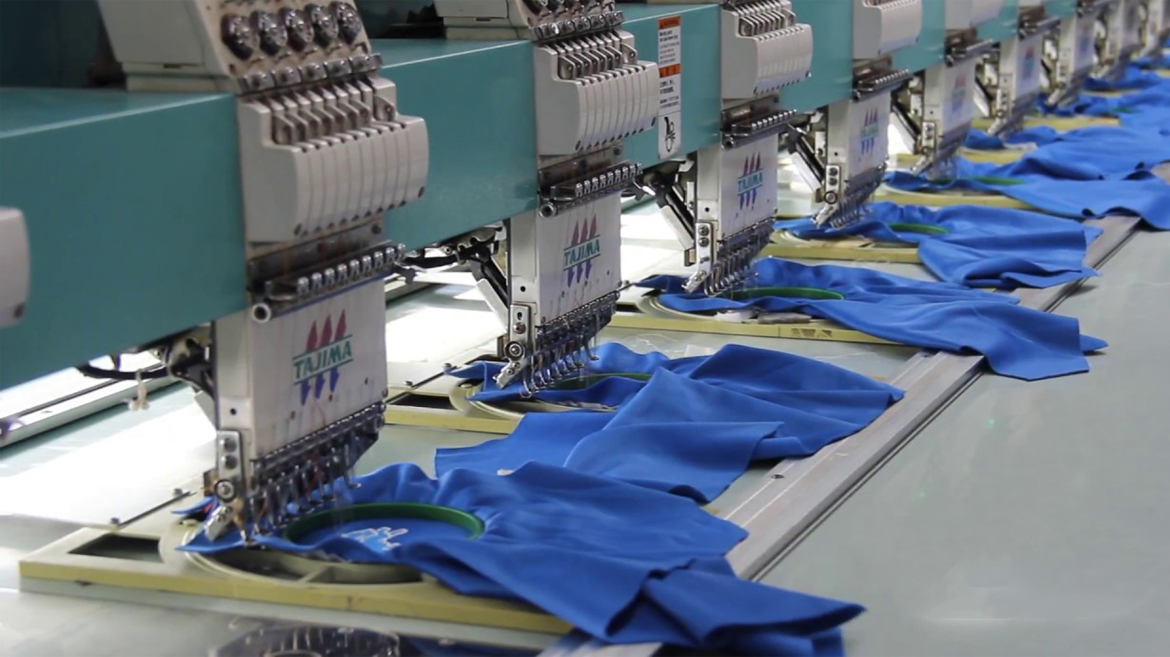
Once the logo or advert program is fed into the computer, it is transmitted to the embroidery machines for printing. Most embroidery machines feature parameters that enable them to enhance embroidery results. They feature a motif with changing needles designed to change the pattern depending on the instructions given. Hence big embroidery machines can perform up to 24 embroideries at the same time. They are efficient and increase productivity while lowering the cost of production.


How it works
It entails putting the company logo and the slogan on paper before digitizing or converting them into readable data. The logo or slogan is then converted into a vector graphic and loaded onto a punch program. Before the emergency of digitization technology, the commands were punched by hand onto a card. The embroidery machines convert the program into textile embroidery.
But modern embroidery machines features a frame system that holds the targeted area of a fabric under the sewing needle. It then moves the piece as per the programmed digital embroider pattern.
Application
Marketing – factory embroidery creates patterns on textiles that are used in corporate advertising, branding and even in making uniforms.
Fashion industry- it may be used to decorate apparel and garments for fashion shows or for wearing.
Home décor and gifts- factory embroidery creates textiles for crafters or anyone interested in giving out gifts. It can be used to create home décor, especially the hangings, pillow and quilts.
Types Of Machines Used In Factory Embroidery
Industrial embroidery is capital intensive and utilizes a range of machines, including those controlled by computers. The machines are categorized depending on the needlework appearance and the technique they use. The commonly used machines include:
· Link stitch embroidery machine- they create patterns automatically or manually. The machine is also referred to as chenille embroidery
· Modern computerized machines -are embroidery or sewing machines that are computer-controlled with patterns stored in the computer. This machine features multiple heads with threads and is capable of mass production.
Generally, factory embroidery machines combine sewing and embroidery techniques. They feature a framing system that holds the fabric in place and automatically moves the needle to help create a design on software. The machine features a computer that reads the digital design on the software. The computer transmits the information or pattern to the embroidery machine, which then embroiders the pattern.